
Teller County Parole and Probation
Parole and probation are often confused because both can follow a release from custody. They are not the same record. Probation is usually ordered by a court instead of, or after, a jail sentence. A person can leave the Teller County Detention Center on probation without ever entering CDOC custody. Parole follows a Colorado prison sentence, reparole, or parole revocation process. A person released from CDOC may no longer be housed in prison but may still be supervised on parole.
| Supervision type | Who controls it | How it connects to release |
|---|---|---|
| Probation | Colorado Judicial Branch and the Fourth Judicial District probation structure | May follow a Teller court sentence without a prison stay. |
| Parole | CDOC Adult Parole and the Colorado State Board of Parole | Follows release or reparole from state prison custody. |
| Discharge | The supervising court, probation office, CDOC, or parole authority | Ends the supervision term under the agency record. |
Verify Teller Post-Release Supervision
Start with the system that likely created the supervision status. A local jail release after a misdemeanor or deferred sentence may point to probation and the Teller court docket. A state prison release points to CDOC and parole records. A person can appear absent from the jail roster because they left jail, but the supervision record may live with a court or statewide agency.
- Check the Teller release record or jail detail to learn whether the person left jail, transferred, or had a court-driven release.
- Search the Teller County docket for sentencing, probation orders, revocation events, bond orders, or case disposition.
- Use the probation contact path when the court record points to probation or a probation-related hearing.
- Use CDOC Offender Search when the person may have served a state prison sentence or been released to parole.
- Check the CDOC Par. Board calendar when a parole hearing date or board review is part of the question.
- Request records from the controlling office when public search tools do not show the supervision end date or conditions.
Note: A jail release date and a supervision discharge date can be months or years apart.
Teller County Probation Contact
The Teller court page gives the local probation routing. It tells probationers to contact their own probation officer directly, email the officer using the firstname.lastname@judicial.state.co.us format, or contact the Probation Department. It also asks callers to indicate urgency and allow 24 hours for a response before contacting again. That is not a public probationer search, but it is the official supervision contact path for Teller County probation questions.
Fourth Judicial District ProbationPhone: 719-452-5900
Email: 04probation@judicial.state.co.us
Individual officer email format: firstname.lastname@judicial.state.co.us
The Teller County court general contact is 719-689-7360 and tellerclerkgeneral@judicial.state.co.us. Court records can show whether probation was ordered, modified, revoked, or terminated, while the probation office handles supervision communication.
Teller County Parole Checks
There is no Teller-only parole board. A Teller County conviction that produces a prison sentence moves into the statewide CDOC and Colorado State Board of Parole system. The CDOC Offender Search profile can show parole-related dates, and the public Par. Board tab displays monthly hearing calendars. The visible calendar instructions say users can hover over a date to pull up that day's schedule and click a calendar title to view a larger calendar.
The CDOC Parole Board calendar supports hearing timing research, not final release proof. Outcomes can include granted parole, denial, deferral, deferral to mandatory release date, rescission before release, revocation after release, or discharge. The formal result may be reflected later in CDOC records, parole records, or a custody-status change.
The CDOC parole calendar is the public hearing schedule path.
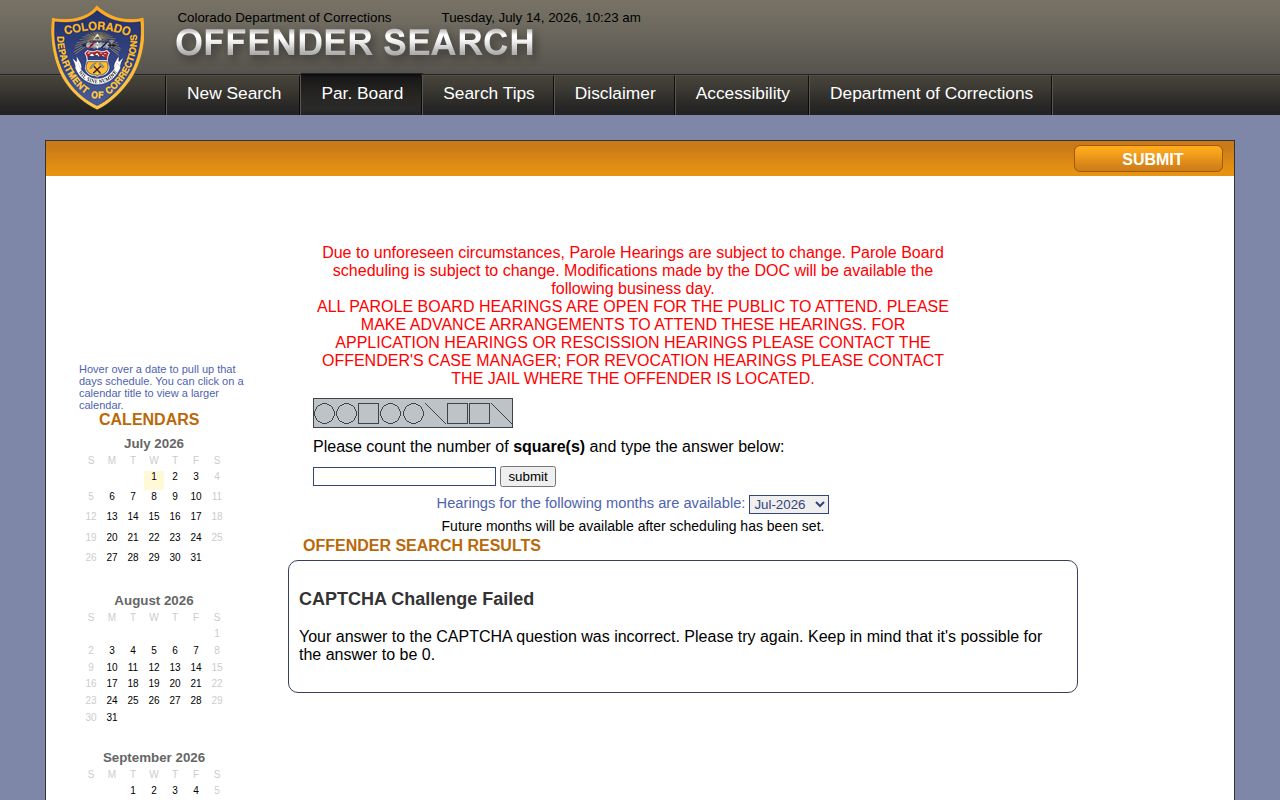
Use it with the CDOC profile and records request path when a person-specific parole decision must be confirmed.
Teller Supervision Terms
Several terms appear across court, jail, and CDOC records. A short glossary helps keep the record systems separate.
- Parole
- State supervision after release from a Colorado prison sentence or after reparole.
- Probation
- Court-ordered supervision that may be imposed without a prison sentence.
- Absconder
- A supervised person who cannot be located or has stopped reporting as required.
- Revocation
- A court or parole process that can end supervision status and return the person to custody.
- Discharge
- The end of the supervision or sentence under the controlling agency record.
Colorado Supervision Release Law
Colorado law treats release and supervision decisions as official criminal justice actions in key contexts. C.R.S. 24-72-302 includes pretrial or post-trial release from custody and decisions to grant, order, or terminate probation or parole within records of official action. That is why the court, jail, CDOC, probation, and parole records can all matter to a Teller County supervision lookup.
Parole eligibility is governed by C.R.S. 17-22.5-403 and related sentence-computation rules. Earned time under C.R.S. 17-22.5-405 can affect state prison dates. Mandatory parole under C.R.S. 18-1.3-401 means a CDOC release can lead to supervision rather than a complete end of correctional control.
Teller Release Status Cue
Teller's inmate phone and commissary page says mail received for an inmate no longer in custody will be returned to sender. That is a useful sign that the jail may no longer hold the person, but it does not identify probation, parole, discharge, or transfer status. Use it only as a cue to check the jail release feed, records request, court docket, CDOC, or supervision contact.
The same source lists jail-account mailing details, which should not be used once a person is released from local custody. If mail handling suggests the person has left the facility, the next question is where the legal status moved: court, probation, CDOC parole, another jail, federal custody, or no continuing supervision.
Teller Supervision Discharge
Supervision ends through the office or agency that controls it. Probation discharge is a court and probation record. Parole discharge is a CDOC or parole record. A jail release record can prove the person left the Teller County Detention Center, but it cannot by itself prove probation has ended or a parole sentence has discharged.
The Teller County docket is useful when the end of supervision follows a court event, such as a probation termination, revocation ruling, resentencing, or modification order. CDOC records are the better source when the question is a parole discharge, reparole after revocation, or sentence discharge after mandatory parole. If a public search result is unclear, request the specific discharge or termination record from the agency that supervised the person, not from the jail alone.
When the question starts with a release from jail, use the home page's Teller County released inmates record path to obtain the jail release details first. Then use the court, probation, or CDOC source that matches the next status.
Public Record Search
Sponsored Results